Responsum for CKD
{{user.displayName ? user.displayName : user.userName}}
{{ user.userType }}

Already a member?
Sign inBecome part of the foremost online community!
Sign Up NowOr, download the Responsum for CKD app on your phone


Bayer, National Kidney Foundation, and others
Learn what this priority review means, how CKD affects people with type 1 diabetes, and what treatments are currently available.
People living with type 1 diabetes face a higher risk of developing chronic kidney disease (CKD), one of the most serious long-term complications of diabetes. While advances in diabetes care have helped many people better manage their health, treatment options specifically approved to slow kidney disease progression in people with type 1 diabetes remain limited.*
That is why a recent announcement from Bayer has attracted attention among kidney and diabetes specialists. The U.S. Food and Drug Administration (FDA) has accepted and granted Priority Review to a supplemental New Drug Application (sNDA) for finerenone, a medication that is already approved for certain people with CKD associated with type 2 diabetes.
Here is what this news means, what researchers know so far, and why it matters to people living with type 1 diabetes and CKD.
Type 1 diabetes is an autoimmune condition in which the body’s immune system attacks the cells that produce insulin. Over time, high blood sugar levels can damage blood vessels throughout the body, including the tiny blood vessels in the kidneys.
The kidneys act as the body’s filtration system, removing waste products and excess fluid from the blood. When these filters become damaged, the kidneys may begin to lose their ability to function properly.
One of the earliest signs of diabetes-related kidney damage is the presence of albumin, a protein, in the urine. Healthcare providers often monitor this using a urine albumin-to-creatinine ratio (UACR) test. Elevated UACR levels may indicate that the kidneys are under stress and becoming less effective at filtering blood.
CKD develops gradually and often causes no symptoms in its early stages. As a result, regular monitoring of kidney function is an important part of long-term diabetes care.
Although not everyone with type 1 diabetes will develop chronic kidney disease, CKD remains one of the most serious long-term complications of diabetes.
At present, there are no medications specifically approved in the United States to slow CKD progression in people with type 1 diabetes.
Instead, treatment focuses on managing risk factors known to contribute to kidney damage.
Key components of care may include:
Many people with diabetes-related kidney disease are prescribed medications known as ACE inhibitors or ARBs. These drugs help lower blood pressure and reduce pressure within the kidneys, which may help slow further damage.
Healthcare providers also closely monitor cardiovascular health because people with both diabetes and CKD have an increased risk of heart disease.
In recent years, several newer therapies have shown benefits for people with type 2 diabetes and CKD. However, many of these treatments have not been widely studied or approved for people with type 1 diabetes, leaving an important gap in available treatment options.
Finerenone is a medication that blocks the activity of mineralocorticoid receptors, which are involved in processes that can contribute to inflammation and scarring in the kidneys and cardiovascular system.
The medication is currently approved in the United States under the brand name Kerendia® for adults with chronic kidney disease associated with type 2 diabetes. It is also approved for certain adults with heart failure.
Researchers have been interested in whether finerenone might provide similar kidney-protective benefits for people with type 1 diabetes and CKD.
The FDA’s Priority Review designation is intended for applications that may offer significant improvements in the treatment, diagnosis, or prevention of serious conditions.
Importantly, Priority Review does not mean a treatment has been approved. It simply means the FDA plans to review the application on an accelerated timeline.
Bayer’s application is supported by results from the phase 3 FINE-ONE clinical trial, which enrolled 242 adults with type 1 diabetes and chronic kidney disease.
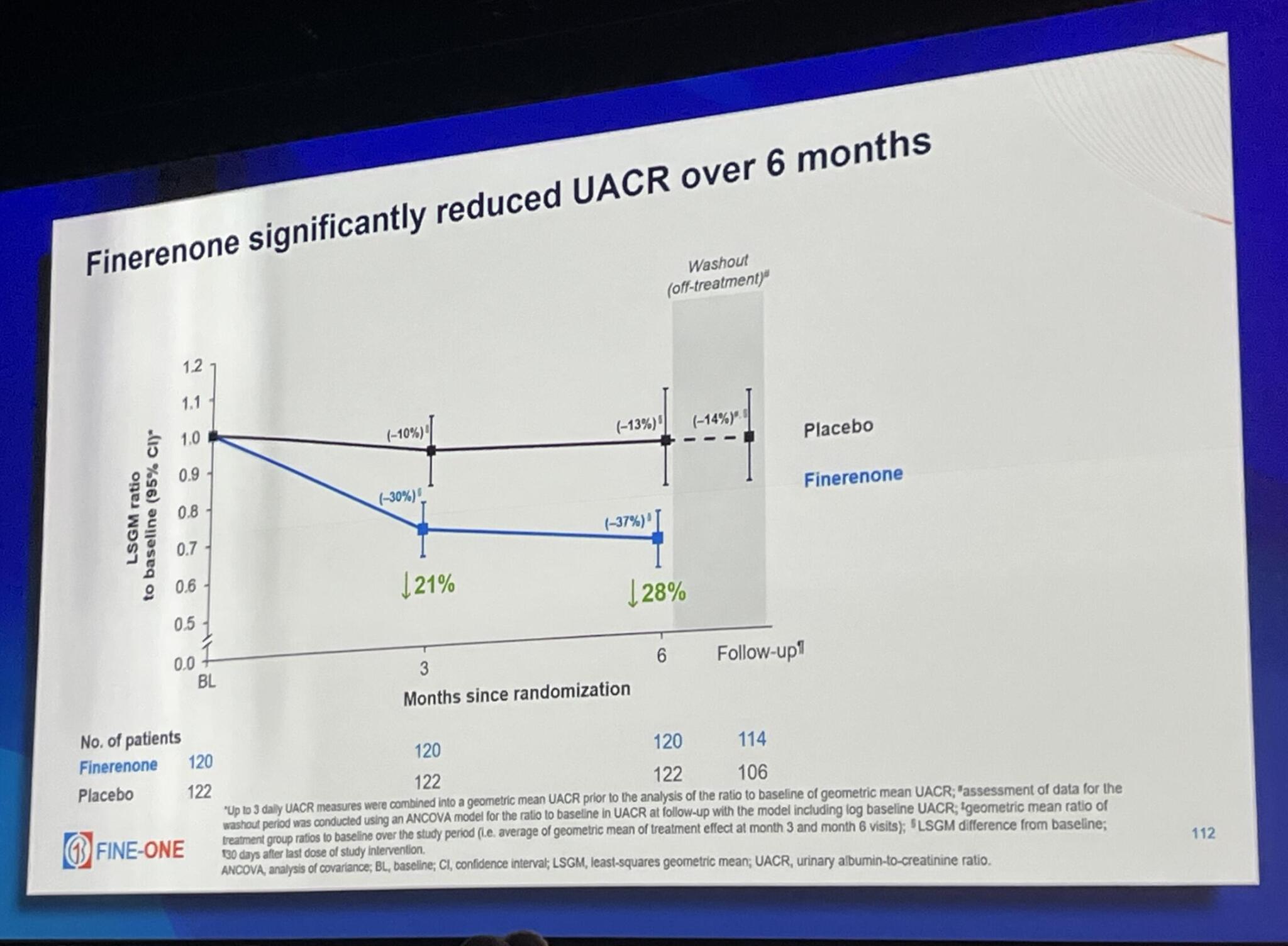
Participants received either finerenone or a placebo in addition to standard treatment. The study’s primary goal was to determine whether finerenone could reduce UACR levels over six months.
According to Bayer, participants who received finerenone experienced a statistically significant reduction in UACR compared with those receiving placebo. Researchers also reported that the medication’s safety profile was generally consistent with what has been observed in previous finerenone studies involving people with type 2 diabetes and CKD.
The complete results were presented at Kidney Week 2025 and published in the New England Journal of Medicine.
While these findings are encouraging from a research perspective, additional regulatory review is still required before the FDA decides whether finerenone should be approved for this specific use.
At this stage, the most important takeaway is that finerenone is being evaluated by the FDA for a potential new use in adults with type 1 diabetes and chronic kidney disease.
The Priority Review designation reflects the FDA’s recognition that there is a need for more treatment options in this patient population. However, it does not mean the medication has been approved, nor does it indicate how the FDA will ultimately rule on the application.
For now, standard approaches to managing type 1 diabetes-associated CKD remain unchanged. These include maintaining good blood sugar control, managing blood pressure, monitoring kidney health regularly, and working closely with your healthcare team.
As research continues, studies like FINE-ONE may help improve understanding of how kidney disease can be treated in people with type 1 diabetes. Whether finerenone ultimately becomes a new treatment option will depend on the FDA’s review of the available evidence.
References
Medical Review Note
This article was developed using publicly available information and reviewed for clarity and accuracy. It is not a substitute for professional medical advice. Always consult your healthcare provider about your specific condition and treatment options. This content is shared for informational purposes only, and Responsum Health does not receive any commercial benefit or compensation from Bayer Pharmaceuticals or any other publication in the references section used as sources for this information.
Source: {{articlecontent.article.sourceName}}
Receive daily updated expert-reviewed article summaries. Everything you need to know from discoveries, treatments, and living tips!
Already a Responsum member?
Available for Apple iOS and Android


We've sent a report to our community managers who will take the necessary steps. This member will be removed form your Community Chat and will no longer be able to message you.
Please contact us if you have any questions.
Add Comments
Cancel