Responsum for CKD
{{user.displayName ? user.displayName : user.userName}}
{{ user.userType }}

Already a member?
Sign inBecome part of the foremost online community!
Sign Up NowOr, download the Responsum for CKD app on your phone


Learn what your kidney numbers really mean, why your stage isn’t a countdown to dialysis, and how understanding your labs can help protect your kidney health.
As a chronic kidney disease (CKD) patient, you’ve probably heard numbers like eGFR, creatinine, or stage 3 more times than you can count. Yet many people walk out of appointments still unsure what those numbers actually mean, or what they should do with them.
This article is here to clear the fog. Understanding your CKD stage isn’t about predicting the worst-case scenario. It’s about knowing where you are right now so you and your care team can make informed decisions to protect your kidney health.
CKD stages are based primarily on a lab value called eGFR (estimated glomerular filtration rate). Your eGFR indicates how well your kidneys filter waste from your blood.
In general:
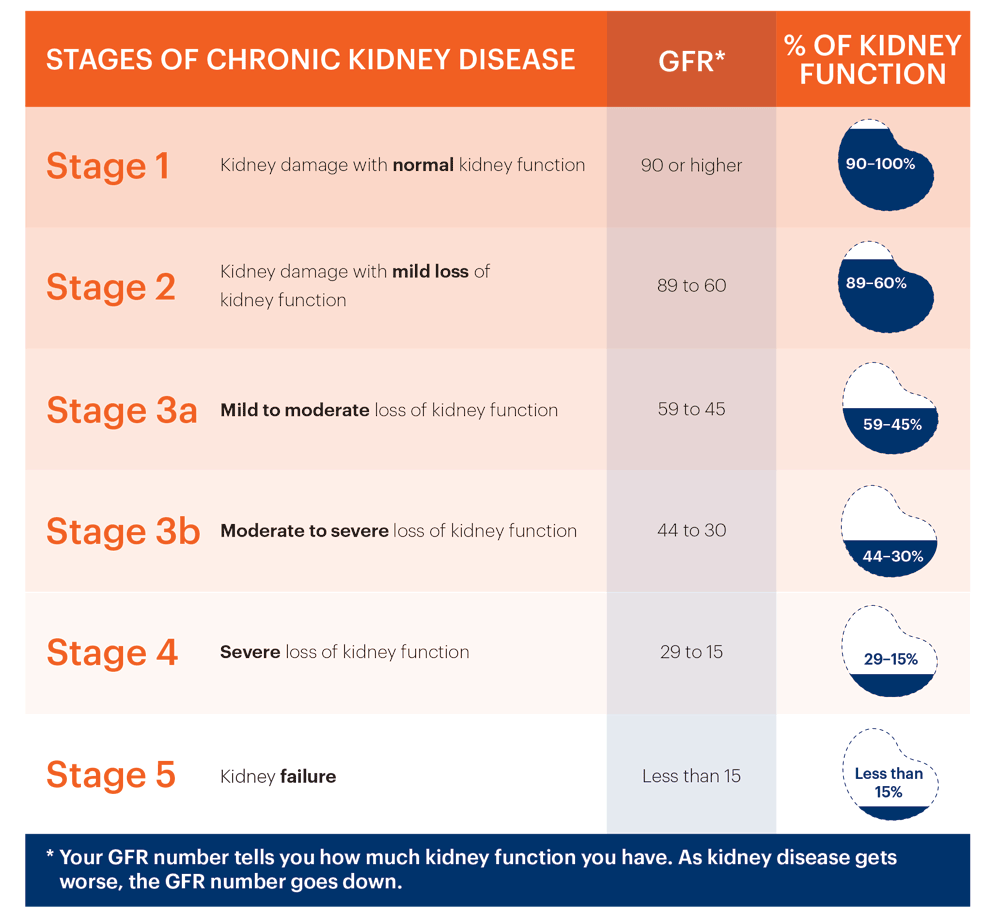
CKD is typically grouped into five stages, from Stage 1 (mild damage with normal or near-normal function) to Stage 5 (kidney failure). But here’s an important truth many patients don’t hear clearly:
👉 Your stage is not a countdown clock.
Two people with the same eGFR can have very different outcomes depending on the cause of their CKD, their overall health, and how early they take action.
One of the most common fears patients have is assuming that a certain stage automatically means dialysis is around the corner. In reality, many people live years—or decades— in the same CKD stage without progressing.
CKD progression depends on factors like:
This is why understanding your stage should feel empowering, not frightening. It gives you a baseline to work from—not a fixed destiny.
While eGFR is important, it’s not the only number that tells your kidney story. You’ll want to understand:
A single lab result doesn’t tell the full story. Patterns matter more than snapshots.
Knowing your stage is just the starting point. These questions can help you turn information into action:
If you don’t feel confident about the answers—or if they’re brushed off—it’s okay to ask again or seek a second opinion. Understanding your disease is part of your care, not a luxury.
No matter where you fall on the CKD spectrum, there are steps that consistently support kidney health:
These actions don’t just slow CKD—they help you feel more in control.
Your CKD stage is information, not a verdict. It helps guide conversations, decisions, and priorities—but it doesn’t define your future on its own.
When you understand what your numbers mean, you’re better equipped to ask the right questions, advocate for yourself, and work with your care team to protect your kidney health for as long as possible.
And remember: you don’t have to navigate this alone. Learning, asking, and staying engaged are powerful tools—and you’re already using them.
To ensure that we always provide you with high-quality, reliable information, Responsum Health closely vets all sources. We do not, however, endorse or recommend any specific providers, treatments, or products, and the use of a given source does not imply an endorsement of any provider, treatment, medication, procedure, or device discussed within.
Source: {{articlecontent.article.sourceName}}
Receive daily updated expert-reviewed article summaries. Everything you need to know from discoveries, treatments, and living tips!
Already a Responsum member?
Available for Apple iOS and Android


We've sent a report to our community managers who will take the necessary steps. This member will be removed form your Community Chat and will no longer be able to message you.
Please contact us if you have any questions.
Add Comments
Cancel