Responsum for CKD
{{user.displayName ? user.displayName : user.userName}}
{{ user.userType }}

Already a member?
Sign inBecome part of the foremost online community!
Sign Up NowOr, download the Responsum for CKD app on your phone


Prevent Blindness and the CPSC
Fireworks can cause serious injuries and burns. Learn simple fireworks safety tips and what people with chronic kidney disease (CKD) should know to stay safe during holiday celebrations.
Fireworks are a popular part of many celebrations around the world. Whether you’re watching a Fourth of July display in the United States or enjoying fireworks during another holiday or festival, it’s important to keep safety in mind.
Fireworks can cause serious burns, eye injuries, and other emergencies. For someone living with chronic kidney disease (CKD), preventing injuries is especially important because healing may take longer for some people, and serious injuries or infections can be more complicated to manage.
This article is based on guidance from Prevent Blindness, the leading advocacy organization for eye health, and the U.S. Consumer Product Safety Commission (CPSC) to help you celebrate safely while protecting your health.*
Many people assume that only the person lighting fireworks is at risk. In reality, family members, neighbors, and bystanders are also injured every year by fireworks that malfunction or explode unexpectedly.
According to the U.S. Consumer Product Safety Commission (CPSC), fireworks caused 15 deaths and an estimated 13,000 injuries in the United States in 2025. Burns accounted for 38% of all emergency department-treated injuries, and the hands and fingers were the most commonly injured body parts, followed by the head, face, and ears.

Another CPSC report from 2023 provides additional insight into who is most affected by these injuries. It found that:
These numbers are a reminder that fireworks can be unpredictable, even when used carefully.
Chronic kidney disease doesn’t automatically make you more likely to be injured by fireworks, but it can make recovering from an injury more challenging.
For example:
The best way to avoid these complications is to prevent the injury from happening in the first place.
Prevent Blindness recommends that nonprofessionals avoid using fireworks altogether. Instead, enjoy an organized public fireworks display conducted by trained professionals.
If you attend a public display:
If you’d rather skip fireworks altogether, there are many enjoyable alternatives below. These activities can be just as memorable without the added risk.
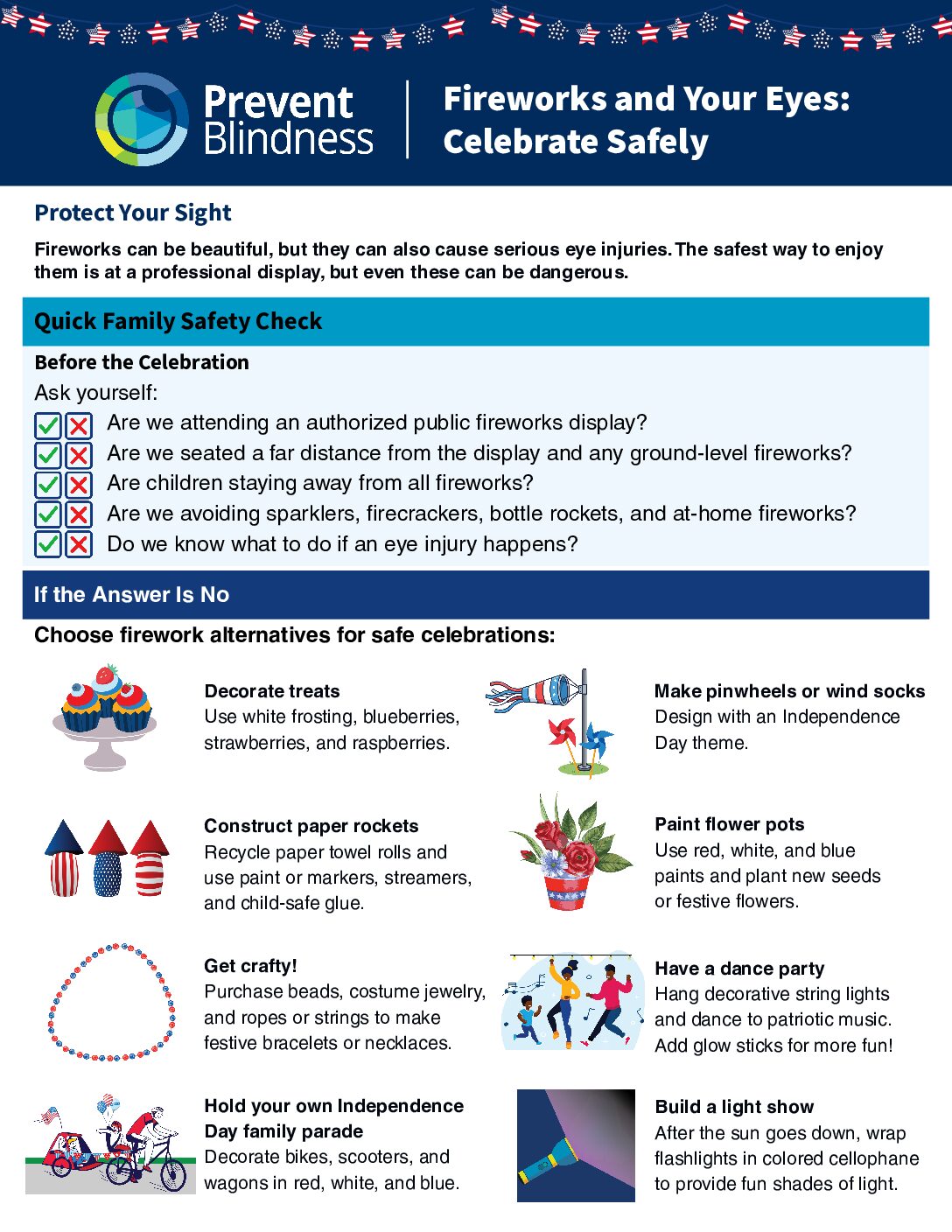
If a fireworks accident happens, seek medical attention immediately.
For an eye injury:
For burns:
If you have CKD, do not take over-the-counter pain medications without checking with your healthcare provider, especially NSAIDs like ibuprofen or naproxen, since they may not be safe for your kidneys.
Learn more about Pain Medications and Kidney Disease.
Holiday celebrations should create lasting memories—not lasting injuries. Most fireworks-related injuries can be prevented by choosing safer ways to celebrate and knowing what to do in an emergency.
Whether you’re celebrating Independence Day in the United States or another special occasion where fireworks are part of the festivities, taking a few simple precautions can help protect your health. If you have chronic kidney disease, staying injury-free also helps you stay on track with your treatment and avoid unnecessary complications, so you can focus on enjoying time with family and friends.
Sources
Source: {{articlecontent.article.sourceName}}
Receive daily updated expert-reviewed article summaries. Everything you need to know from discoveries, treatments, and living tips!
Already a Responsum member?
Available for Apple iOS and Android


We've sent a report to our community managers who will take the necessary steps. This member will be removed form your Community Chat and will no longer be able to message you.
Please contact us if you have any questions.
Add Comments
Cancel